















| Futujara review by John Schucker |
 |
 |
 |
| Written by Vladiswar Nadishana |
| Saturday, 31 January 2009 22:57 |
|
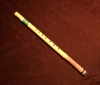
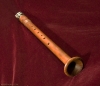
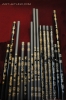
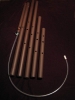
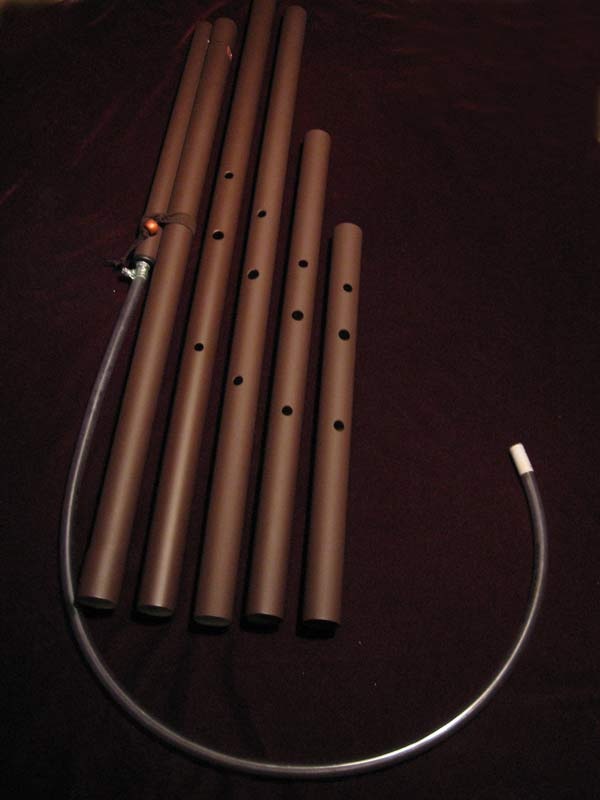
One of our customers John Schucker wrote detailed review about Futujara. He kindly agreed that i repost it here. The original article is here FutujaraHere's an in depth review of my Christmas present, the futujara, pronounced foo-too-yah-rah, produced by Vladiswar Nadishana, and Max Brumberg. The futujara may be purchased from Nadishana's online shop. Just what is a futujara, anyway? Let's have a listen and a look at one. Here's the longer video with all the details. Finally, just to get all of the videos out of the way, here's the original version where Nadishana demonstrates alternate fingering techniques. Tune in for the sweet fujara, udu, and bass jam in the middle of the video. Finally, here's how to assemble and take care of it.In case you can't tell from the video links, let me get the recommendation right out in front. This is an excellent instrument. Why? Sound, price, portability, durability, and flexibility. Let's tackle all of these in turn. Price: This is the least expensive fujara I've seen so far, and with five instruments in one package, it's hard to beat. You can also get the older model, I believe, that is three instruments in one. Durability and Portability: Being made of PVC, it is far more durable than the traditional wooden version, and infinitely more portable. It's collapsable for one thing, and though I'm sure you could damage PVC if you really worked at it, in general it's pretty tough stuff. However, since I'm a musician, these points are the most boring to me. So let's get into the good stuff! Sound: While price, durability, and portability are certainly important, it's the sound which should be the paramount consideration, in my opinion. The futujara is a modernized version of a fujara, an enormous overtone flute from Slovakia. Traditionally these are made of a single piece of wood and are greater than five feet in length. Nadishana's futujara sounds like a fujara should. As opposed to making an instrument similar to a fujara out of PVC, Nadishana has taken pains to put sound first, the instrument truly is a fujara and not something approximating one. You can be assured that the modern materials and other innovations in no way detract from the true sound and playability of a fujara. Flexibility: Now that we know that the futujara is a real fujara, i.e. it has the proper sound, does it have anything else going for it other than being the least expensive fujara, while being extremely tough and easy to transport? Indeed it does! I'll tackle these in order, from simplest to most advanced, i.e. starting with the perspective of a brand new instrument player and then into more advanced topics for those of you who might be familiar with other flutes. As the futujara video says, you get five instruments in one: Four different keys of fujara and an overtone flute. The fujara keys are, in order from shortest and highest to longest and lowest, D, C, A, and G. I should add that you can't play all of these at once, the "four instruments", as it were, are made by detaching a section of PVC with finger holes and replacing it with another section, to change the overall length of the flute. The fifth instrument, an overtone flute, a flute without holes, is the main body without any attached section. This overtone flute, in the key of A, produces a scale via breath control, blowing harder and softer into the flute, and by covering and uncovering the end of the tube, usually with the palm of the hand. Additional notes are gained by partially covering the end, though this is a more advanced and thus more difficult technique. Since the fujara works like a whistle, beginners to the instrument will be able to produce a sound immediately simply by connecting one of the two mouthpieces and blowing into the instrument. One mouthpiece is a small l-shaped tube, and is the traditional style of fujara mouthpiece. This mouthpiece works on the overtone flute and the D and C fujara. You might prefer this mouthpiece to play fujara in the standing traditional style, or to gain slightly easier control of the overtone flute. The other mouthpiece is a length of plastic hose which works on all five instruments and is necessary to play the longer A and G fujara. This hose also offers a great deal of flexibility, you are able to play seated as well as standing. In addition, it actually adds four more instruments, since by covering all holes of a fujara and placing the end of the flute against your leg and removing it, you gain four more overtone flutes, i.e. instruments like the end with no attached tubes. As with most flutes, it is generally easier to get the lower notes and harder to get the higher notes on the shorter instruments, while on the longer instruments the higher notes are easier and the lower notes harder. This is because the higher notes take more breath on the shorter flutes. Conversely, the lower notes on the longer flutes take very little breath. All of the flutes have excellent tone. The D and C instruments project more, while the A and G flutes have a soft and mellow tone.
The hole spacing of Nadishana's instruments is closer than that of traditional fujara. What this means for the beginning player is that, coupled with the hose, it allows short people, and/or those with smaller hands, to play all of the flutes, verified via experimentation, i.e. actually giving them to people to play. The longer flutes will probably take some getting used to, and of course there's probably a limit to how small you can be, but in general most people should be able to manage fairly easily. This is certainly a concern as I'm sure many people would wonder at their potential to play a flute, the G fujara, that is almost five feet and ten inches, (1.78 meters), long. If you are not used to playing flutes, especially larger ones, I recommend hand stretching exercises. Here are two learned from a book on bansuri, also excellent warmup exercises. Place the thumb of your opposite hand at the base of your finger, right at the nuckle. Your thumb should be resting on the back of your hand, not the palm. With the fingers of your other hand, the same hand with the thumb at the base of the finger, gently bend the finger back and hold it for a few seconds. It goes without saying that if this hurts you're doing it too much. Repeat for all fingers on both hands. Then, put your thumb and little finger of one hand together. Place them between two fingers of the opposite hand, as far toward the base of your hand as is comfortable. Gently move your thumb and little finger apart and hold for a few seconds. This stretches the webbing between your fingers. Repeat on all fingers, both hands. _____________________________________ |
| Last Updated on Thursday, 29 October 2009 18:02 |

 This isn't a drawback as such, but the hose takes a bit of getting used to, it tends to want to come out of your mouth or move around. Also you can only play the shorter instruments in the traditional style. This is because the tube that takes the air to the fipple, to which the mouthpieces connect, has to be short enough to work on the D and C instruments. It might be nice at some point in the future if some sort of extension tube were possible, say something with the mouthpiece connector at one end and more tube like the air channel at the other. That way you could connect the extension just like a mouthpiece for the A and G instruments and then connect the traditional mouthpiece. Obviously you'd need enough demand for this, and honestly I play far more seated than standing. I'm just a fan of possibilities and keeping as much of the traditional around as possible.


